
Homeowners: is it really compulsory to take out DO cover for a renovation?
Homeowner renovating your house: is structural damage insurance (Dommage Ouvrage) really compulsory? A clear answer, concrete cases and the risks of going without.
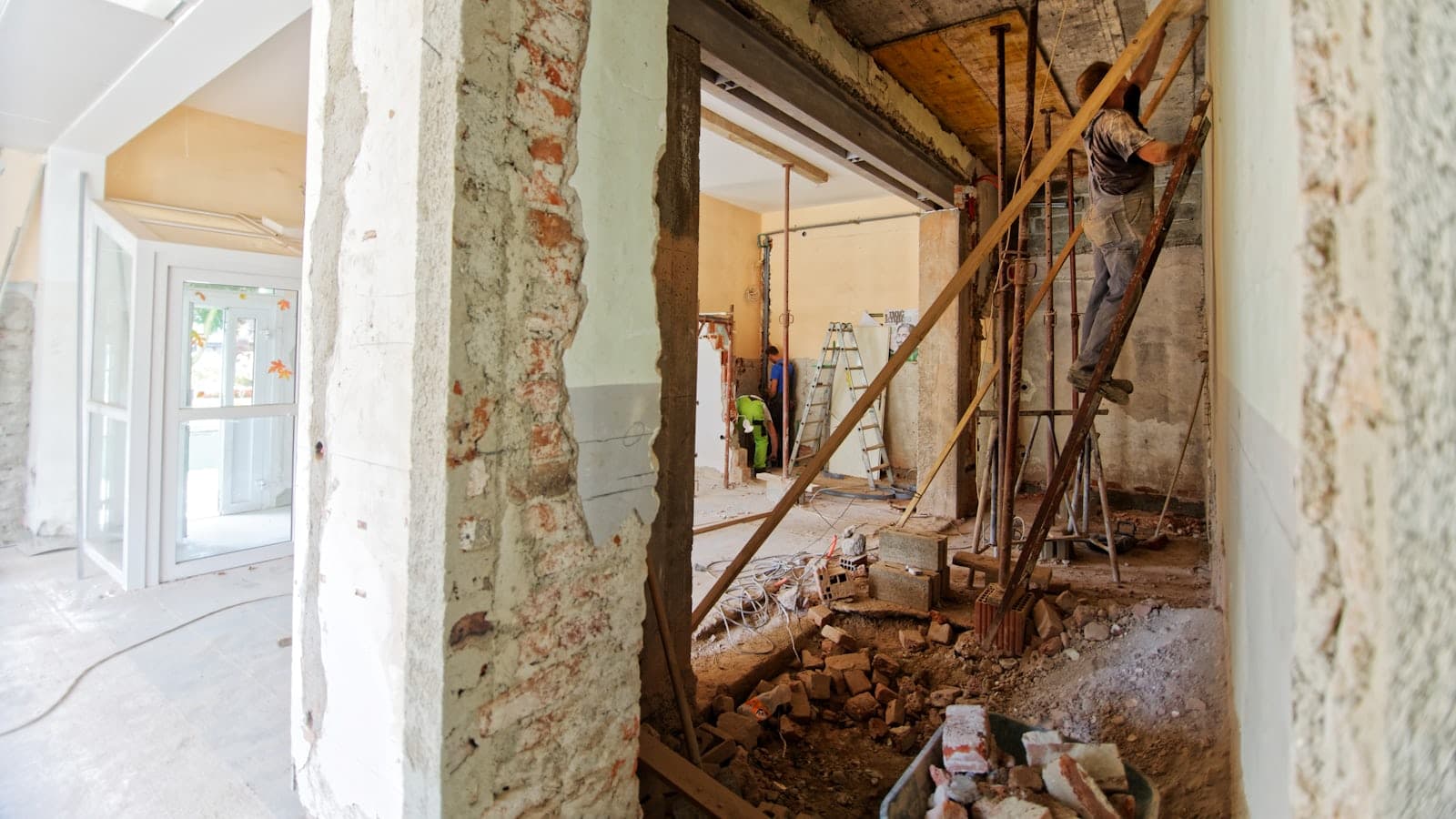
"I'm only a private individual, I'm renovating my own house… is structural damage insurance really compulsory?" This is one of the questions most often put to construction insurance brokers. The answer is more nuanced than it seems — but one thing is certain: going without is rarely a good idea.
What the law says for private individuals
Article L242-1 of the French Insurance Code is unambiguous: any natural or legal person having construction work carried out must take out structural damage insurance before work begins. The law makes no distinction between professionals and private individuals: the obligation applies to all clients (maîtres d'ouvrage).
The specific feature for private individuals lies in the penalties:
- for a professional (developer, property-holding company, property dealer), the absence of structural damage insurance is a criminal offence punishable by 6 months' imprisonment and a €75,000 fine;
- for a private individual building for themselves, no specific criminal penalty is provided.
It is this absence of a penalty that creates the confusion: many wrongly conclude that structural damage insurance is not "really" compulsory for them.
Which renovations require structural damage insurance?
The obligation to hold structural damage insurance follows that of ten-year structural cover. Put plainly: as soon as works engage a constructor's ten-year liability, structural damage insurance must be taken out.
This includes in particular:
- works affecting the structure: load-bearing walls, roof framing, foundations, roof;
- extension or storey addition (creation of floor area);
- reroofing or roof-framing renewal;
- external wall insulation (ITE) over a significant part of the building;
- waterproofing works (flat roof, façade, basement);
- installation of systems inseparable from the building: underfloor heating, integrated heat pump, central heating system;
- major renovation of an older house affecting several technical trades.
Conversely, the following do not require a DO policy:
- painting, wallpaper, unbonded floor coverings;
- replacing removable equipment (portable electric radiators, household appliances);
- purely decorative work with no impact on the building.
For the detailed list, read our guide Which works require structural damage insurance?.
The real risks for a private individual
Even without a criminal penalty, the absence of structural damage insurance exposes you to consequences that are often devastating for your personal finances.
1. Footing the bill alone in the event of a defect
If a structural crack appears three years after the work is completed, you will have to:
- bring proceedings (often a court-ordered expert assessment) to establish the constructor's liability;
- wait 18 to 36 months on average before any compensation even begins;
- advance all the funds for urgent repairs during that time.
2. The major risk: the constructor disappears
This is the most common scenario. The firm that did the work may:
- have ceased trading;
- be in compulsory liquidation;
- no longer hold valid ten-year cover.
In that case, without DO, you no longer have any effective recourse. You pay for the entire repair yourself.
3. The disastrous impact on resale
This is the most underestimated boomerang effect. If you sell the property within 10 years of the work being completed:
- the notaire is required to mention the absence of DO in the deed of sale;
- the buyer can negotiate a significant price reduction (often 10 to 20%);
- the buyer's bank may refuse to finance the purchase;
- you remain liable for defects for 10 years towards successive buyers.
Read the full detail of the consequences of selling without DO.
And if I do the work myself?
If you carry out the work yourself (full or partial self-building), the question is more subtle:
- for the part you do yourself, you are your own constructor: no ten-year cover applies, so no DO on that part;
- for the part carried out by professionals (even a single craftsman), the obligation to hold DO remains.
In practice, most insurers refuse to cover a poorly defined mixed project. It is better to clarify roles from the outset and bring in professionals who hold valid ten-year cover.
The right move before signing a quote
Before any major renovation project:
- Ask each craftsman for their current ten-year structural cover certificate.
- Check that the planned works are indeed covered by that ten-year cover (the list of guaranteed activities appears on the certificate).
- Request several structural damage insurance quotes even before signing the works quotes.
- Take out the policy before work begins — it is a condition of the contract's validity.
In summary
- Yes, structural damage insurance is compulsory for private individuals as soon as the works fall under ten-year structural liability.
- The absence of a criminal penalty does not remove the legal obligation.
- Without DO, you foot the entire bill alone in the event of a serious defect.
- If you sell within 10 years, the absence of DO drives down the value of the property.
- The policy must be taken out before work begins.
Need guidance?
Are you launching a renovation project and unsure whether structural damage insurance is required? Our team of brokers will guide you in choosing your structural damage insurance by precisely assessing the nature of your works. Request a personalised quote or get in touch with an adviser.


