
Sole traders and craftsmen: is ten-year structural insurance always compulsory?
Sole trader in construction, micro-entrepreneur, one-person craftsman: is ten-year structural cover (décennale) compulsory in every case? A clear answer, with no hidden exceptions, and the penalties you face.
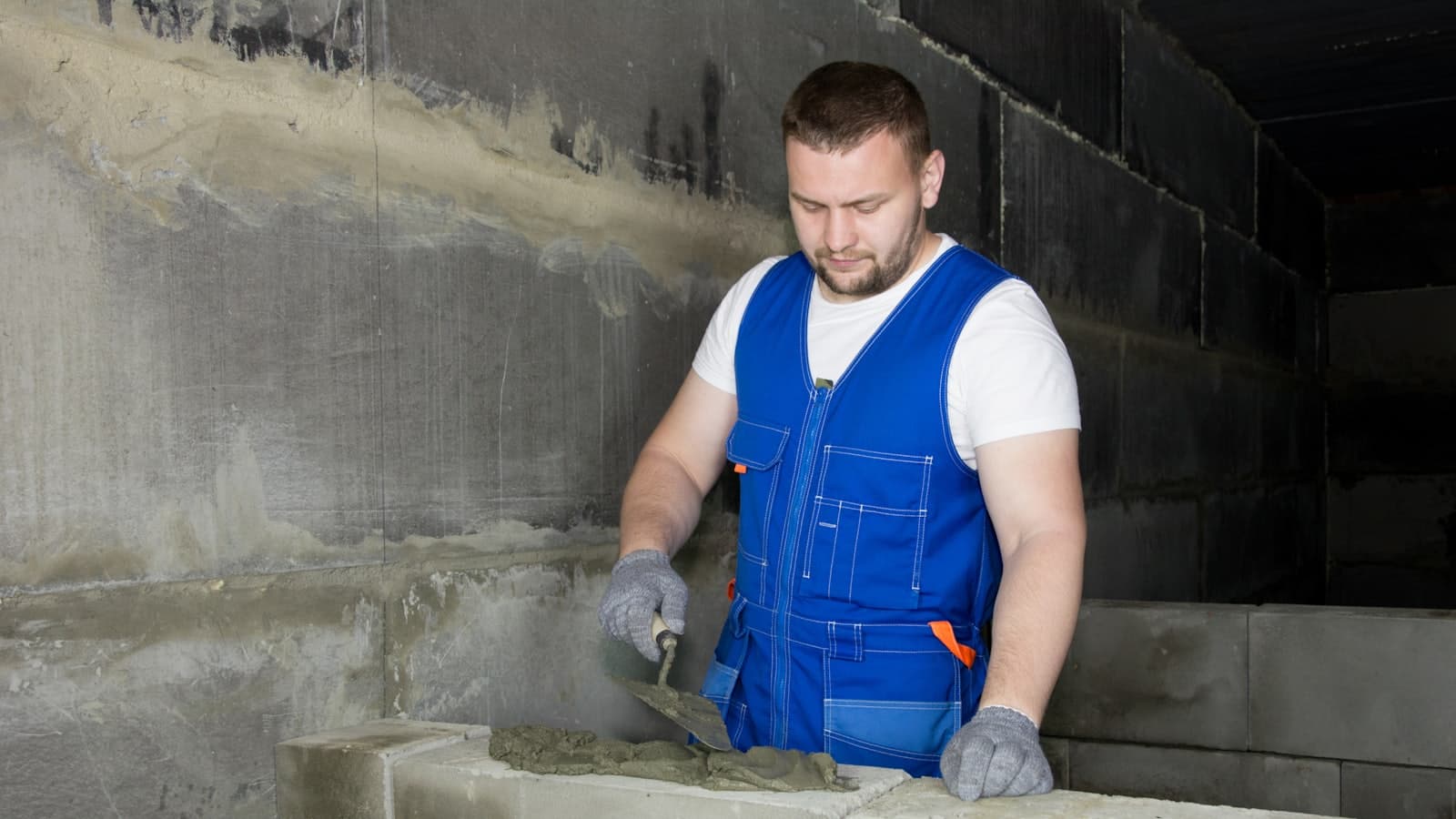
"I'm a sole trader, I'm just starting out, I only take on a handful of jobs a year: do I really need ten-year structural insurance?" This question comes up constantly on forums and with brokers. The answer is unequivocal, and it depends neither on your legal status nor on your turnover. This article is for sole traders and one-person craftsmen who are still hesitating about taking out cover.
The principle: the obligation does not depend on your status
Article L241-1 of the French Insurance Code draws no distinction between legal forms of business. It targets "any natural or legal person whose ten-year liability may be engaged". This covers, without distinction:
- SARL, SAS, SA, EURL (French limited companies)
- Sole proprietorships
- Sole traders / micro-entrepreneurs
- Regulated liberal professions
- Craft cooperatives
The tax and social security regime for sole traders was created to simplify self-employment, not to exempt anyone from professional regulation. Ten-year structural cover is part of that regulation, in the same way as trade qualifications or registration in the trades directory.
Which activities are concerned?
The obligation applies as soon as there is a construction works project within the meaning of articles 1792 and following of the French Civil Code. In practical terms, here is a non-exhaustive list of activities that are systematically concerned:
- Masonry, structural work, foundations
- Roofing, waterproofing, timber framing
- Plumbing, sanitary fittings, heating
- Building electrics, built-in home automation
- Tiling, wall tiling, bonded floor coverings
- Plastering, insulation, partitioning
- Exterior and interior joinery
- Exterior painting (because of its protective function)
- Fitting of doors and windows
- Energy-efficiency retrofitting (external and internal wall insulation, integrated heat pumps)
- Installation of solar (photovoltaic) panels
- Building swimming pools, terraces, conservatories
Certain ancillary activities (simple call-outs, maintenance that does not alter the structure) may fall outside the obligation, but the line is thin. When in doubt, assume that ten-year cover is required.
The false good reasons for not taking out cover
Several myths circulate. They are all false:
"I only do small jobs, this doesn't apply to me"
The value of the job has no bearing whatsoever on the obligation. An €800 job is just as covered by the rule as an €80,000 job if the nature of the work falls within the scope of ten-year liability.
"I'm a subcontractor, it's the main contractor who insures the work"
False. A subcontractor engages their own ten-year liability. What's more, the main contractor will almost always demand your certificate of cover before entrusting you with the job.
"I only work part-time, it's just a bit of extra income"
The obligation is tied to the activity carried out, not to its intensity. A single job a year is enough to trigger it.
"I'm only a sole trader, the authorities know I'm starting out"
No leniency is provided for new sole traders. The criminal penalty set out in article L243-3 of the French Insurance Code applies identically.
How much does ten-year cover cost for a sole trader?
This is the question everyone asks. Premiums vary considerably depending on several factors:
- The activity or activities carried out: a solo painter pays far less than a bricklayer
- Projected turnover: capped for sole traders
- Experience: the premium may fall after a few claim-free years
- Claims history: a past claim pushes the premium up
- Geographical area
As a rough guide, for a solo sole trader:
- Painter: around €800 to €1,500 / year
- Plumber: €1,500 to €2,500 / year
- Electrician: €1,200 to €2,200 / year
- Bricklayer: €2,000 to €4,000 / year
- Roofer, timber framer: €2,500 to €5,000 / year
- Combined structural and finishing trades: €3,500 to €6,000 / year
These orders of magnitude can vary appreciably depending on the insurer, your profile and the options chosen (professional liability, legal protection, etc.).
When should you take out ten-year cover?
Before the first job begins. This point is essential: the cover must be in force on the date the site opens in order to protect that job. A policy taken out "mid-job" does not apply retroactively.
In practice:
- Define precisely which activities you are going to carry out
- Obtain several quotes (at least 3)
- Check the list of activities covered in each proposal
- Take out the policy at the latest the day before your first job starts
- Keep the certificate so you can give it to each client
A special case: the training and experience required
To insure a sole trader in construction, insurers generally check:
- The qualification (vocational certificate, technical diploma, engineering degree) matching the activity
- Or validated professional experience (often at least 3 years in the trade)
- Registration in the trades directory or holding a recognised craft qualification
Without a qualification or experience, you risk being refused cover, or being charged heavily loaded premiums. Plan for this from the moment you set up your micro-business.
And if I'm just starting out, can I wait for my first job?
No. If you canvass clients, sign a quote without ten-year cover and that client asks to see your certificate, you risk losing the job — and, more importantly, if you start work without insurance, you are breaking the law from day one.
The right move: take out ten-year cover as soon as you set up your business, or at the very latest as soon as you have signed a first quote and before you put a single tool on site.
In summary
- A sole trader in construction is subject to exactly the same obligation as every other firm
- No threshold, no exception: a single job is enough to trigger the obligation
- Penalties run up to a €75,000 fine and 6 months' imprisonment
- The average cost ranges from €800 to €5,000 / year depending on the activity
- Take out cover before the first job starts, never afterwards
Need guidance?
Are you launching a construction business as a sole trader, or looking to get better control of your ten-year cover costs? Our team of brokers compares the offers best suited to your profile and your activities. Request a personalised quote or get in touch with an adviser.


