
Quels sont les dommages réellement couverts par la décennale ?
Solidité, destination, équipements indissociables : décryptage clair et illustré des dommages couverts par la garantie décennale, avec exemples concrets de chantiers.
"Ma décennale me couvre pour quoi exactement ?" C'est la question que tout artisan finit par se poser, souvent au moment où un client signale un désordre. Cet article s'adresse aux professionnels du bâtiment qui veulent comprendre précisément ce que leur garantie décennale prend en charge — et où s'arrête sa couverture.
Le principe : un dommage "grave" et "caché"
Pour qu'un dommage soit pris en charge par la décennale, il doit cumuler plusieurs critères :
- Apparaître après la réception des travaux
- Présenter une gravité suffisante au sens de l'article 1792 du Code civil
- Ne pas être visible et accepté lors de la réception (sinon, il relève de la garantie de parfait achèvement)
- Concerner un ouvrage ou un équipement indissociable du bâti
Cette logique vise à protéger le maître d'ouvrage contre les défauts importants qui ne se révèlent qu'avec le temps : fissures qui s'aggravent, humidité qui apparaît après deux hivers, défaillance d'une chaudière encastrée au bout de cinq ans.
Catégorie 1 : les atteintes à la solidité de l'ouvrage
Ce sont les cas les plus emblématiques. Sont concernés les désordres qui menacent la pérennité physique du bâtiment ou d'une de ses parties essentielles. Exemples typiques :
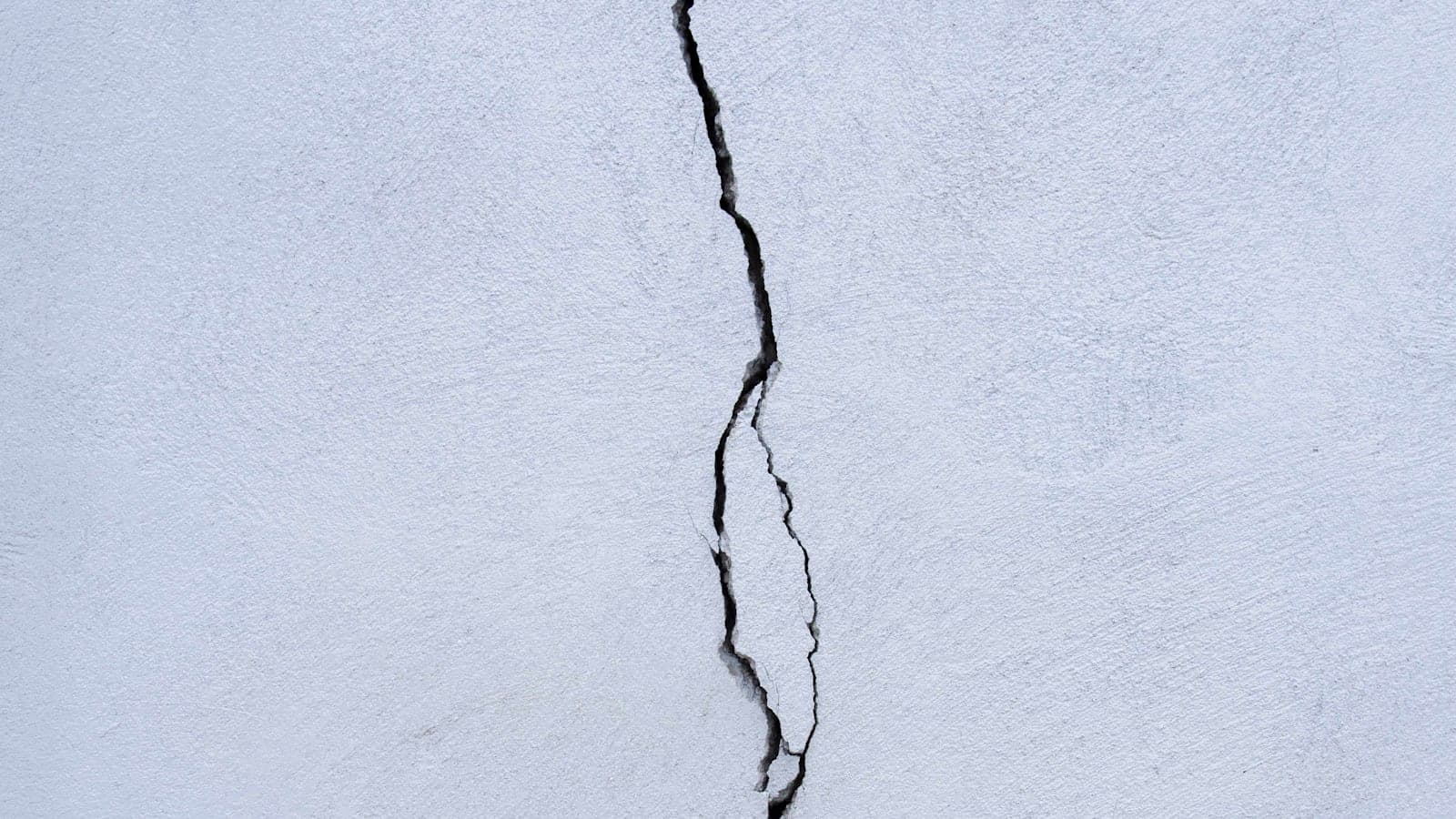
- Fissures structurelles traversant un mur porteur
- Affaissement de fondations dû à un défaut d'étude de sol ou de coffrage
- Effondrement partiel d'une charpente ou d'une dalle
- Déformation majeure d'un plancher porteur
- Décollement d'enduit affectant l'étanchéité ou la tenue d'une façade
Le critère décisif est la mise en cause de la solidité, même de manière progressive. Une fissure de retrait superficielle, esthétique, ne relève pas de la décennale ; une fissure évolutive qui traverse la maçonnerie, oui.
Catégorie 2 : l'impropriété à destination
C'est la catégorie la plus large — et la plus discutée en jurisprudence. Un ouvrage est "impropre à sa destination" lorsqu'il ne remplit plus la fonction pour laquelle il a été conçu, même s'il tient encore physiquement debout.
Cas fréquents reconnus par les tribunaux :
- Infiltrations rendant une toiture non étanche ou une cave inutilisable
- Humidité chronique rendant un logement insalubre
- Défaut d'isolation thermique majeur (logement impossible à chauffer dans des conditions normales)
- Défaillance d'un chauffage central intégré rendant le logement inhabitable l'hiver
- Nuisances acoustiques dépassant les seuils réglementaires
- Affaissement de carrelage rendant un sol dangereux à la marche
Le juge apprécie au cas par cas la gravité du désordre. Un simple inconfort ne suffit pas ; il faut que l'usage normal du bien soit compromis.
Catégorie 3 : les équipements indissociables
L'article 1792-2 du Code civil étend la décennale aux équipements qui font corps avec l'ouvrage. Le critère : leur démontage entraîne la détérioration ou le retrait d'un élément constitutif du bâtiment.
Exemples d'équipements considérés comme indissociables :
- Une chaudière scellée dans une chaufferie maçonnée
- Un plancher chauffant noyé dans la dalle
- Des canalisations encastrées dans les murs
- Un ascenseur intégré à la cage maçonnée
- Une VMC dont les gaines sont noyées dans la structure
À l'inverse, un radiateur fixé au mur, un volet roulant motorisé ou un ballon d'eau chaude indépendant sont des équipements dissociables : ils relèvent de la garantie biennale (2 ans), pas de la décennale.
Quelques cas concrets fréquents
Pour vous aider à situer vos chantiers, voici des situations réelles tranchées par les tribunaux :
- Toiture refaite à neuf, infiltrations 3 ans plus tard → décennale (impropriété à destination)
- Carrelage qui se décolle massivement après 18 mois → décennale s'il y a un défaut de pose lié au support ; biennale si purement esthétique
- Pompe à chaleur en panne, intégrée au système de chauffage → décennale si elle est indissociable
- Peinture qui s'écaille en surface → ni décennale, ni biennale : garantie commerciale du fabricant
- Volet roulant qui ne descend plus → garantie biennale (2 ans)
- Mur porteur qui se fissure après modification de structure → décennale (atteinte à la solidité)
Ce que la décennale ne couvre pas
Pour rappel, la décennale ne prend pas en charge :
- Les défauts purement esthétiques (peinture, jointoiement, alignement)
- L'usure normale liée au temps
- Les dommages causés par un défaut d'entretien ou un usage anormal du client
- Les équipements dissociables (relèvent de la biennale)
- Les sinistres résultant d'un cas de force majeure
Pour une liste détaillée, consultez notre article sur les exclusions de la garantie décennale.
Comment se déroule la prise en charge ?
Lorsqu'un client signale un sinistre potentiellement décennal, la procédure typique est la suivante :
- Déclaration par le maître d'ouvrage à sa dommages-ouvrage (s'il en a une) et à votre assureur
- Expertise contradictoire pour qualifier le désordre
- Décision de prise en charge : qualification décennale ou non
- Indemnisation ou réalisation des travaux de reprise
- Recours éventuel entre assureurs si plusieurs entreprises sont en cause
Votre rôle est de coopérer avec l'expert, de fournir les documents du chantier (devis, plans, PV de réception) et de ne jamais intervenir sur l'ouvrage sans accord préalable de votre assureur.
En résumé
- La décennale couvre trois familles : solidité de l'ouvrage, impropriété à destination, équipements indissociables
- Le dommage doit être grave et apparaître après la réception
- Les défauts esthétiques, l'usure normale et les équipements amovibles ne sont pas couverts
- En cas de doute sur la qualification, c'est l'expertise contradictoire qui tranche
Besoin d'un accompagnement ?
Un sinistre déclaré, un doute sur l'étendue de votre couverture, ou un chantier complexe à venir ? Notre équipe de courtiers vous accompagne dans le choix de votre assurance décennale et l'analyse de vos garanties. Demandez un devis personnalisé ou prenez contact avec un conseiller.


